A high CSAT score looks great, but it doesn’t tell the whole story. The right CSAT software for MSPs should help you understand what’s behind the score and what to do next.
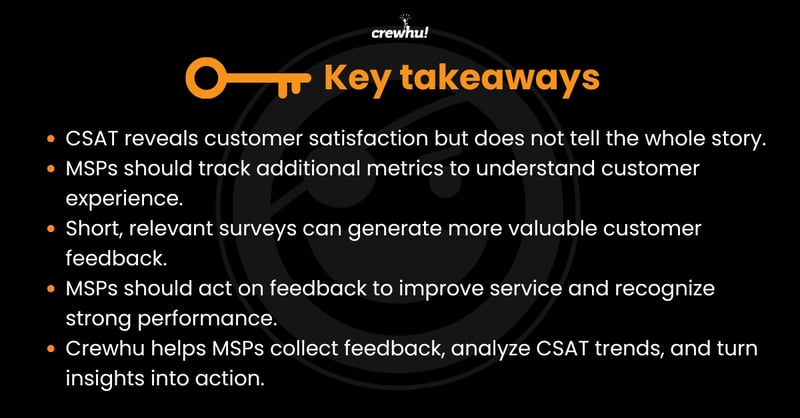 Ever look at a strong CSAT score and think, “Great…but what are we missing?” A high score can still hide recurring client concerns, techs who need support, or simply too little feedback to see what’s really happening.
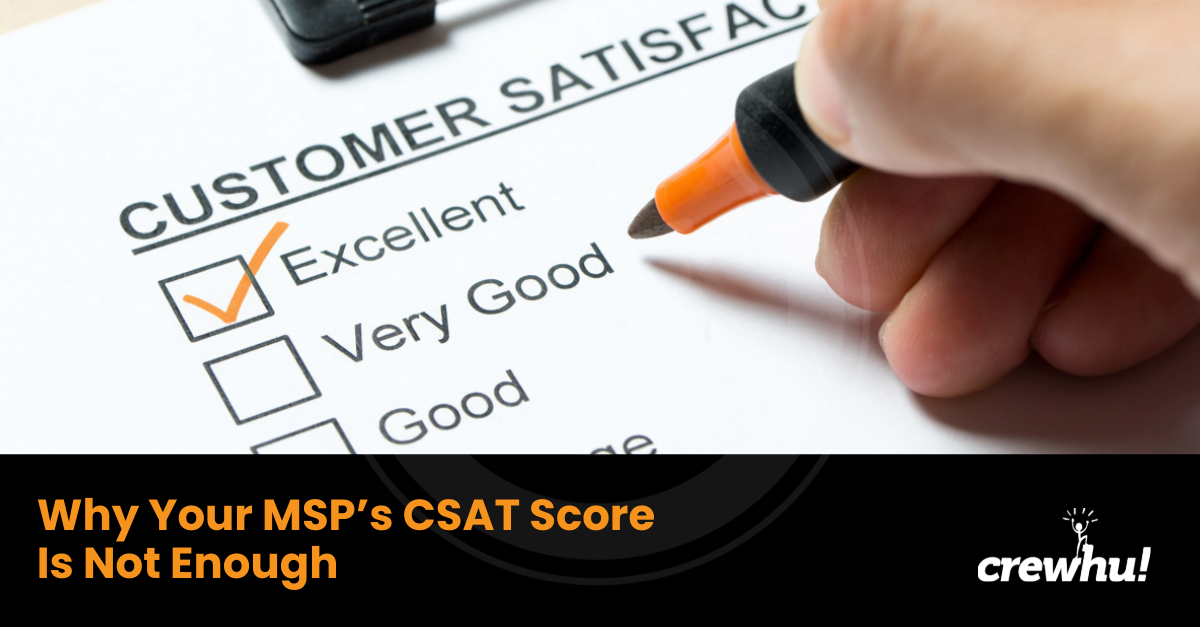
CSAT gives MSPs a useful snapshot of individual service interactions, and it can shape how prospects perceive your business. In fact, research shows that 31% of consumers will only use a business with a 4.5-star rating or higher. But a strong score doesn’t always mean a strong customer experience. One number can mask low response volume, recurring issues, customer effort, and problems that go beyond a single resolved ticket.
That’s why the better question isn’t simply, “What is our CSAT score?” It’s “What is our feedback telling us to improve?” CSAT software for MSPs can help you look beyond the score by connecting response volume, trends, issue tags, customer context, and technician-level insights.
Keep reading to uncover what your CSAT score may be missing, what else you should measure, and how to turn customer feedback into better service and stronger technician performance.
What Does CSAT Actually Tell an MSP?
CSAT tells you how satisfied a client was with a specific service interaction, such as a resolved support ticket. It gives MSP leaders a quick signal of whether the experience met expectations.
However, the score doesn’t explain everything behind that experience. A positive rating may still come with concerns about communication, response time, or repeated handoffs. That context often sits in the written feedback rather than the number itself.
For MSPs, CSAT should start the conversation about service quality, not end it.
The High-CSAT Trap: What Your Score Might Be Missing
A high CSAT score can look reassuring. However, the headline number may hide problems that deserve attention, especially when response rates are low or recurring issues disappear inside an overall average.
Look beyond the score at:
- Response rates: A strong score means less when only a small share of clients respond.
- Feedback themes: Comments explain why clients gave a particular rating.
- Customer-level trends: Individual accounts may be declining while the overall score remains high.
- Service patterns: Repeated concerns can expose process or training gaps.
- Technician-level feedback: Individual results can reveal strong performance and coaching opportunities.
The goal isn’t to question every good CSAT result. It’s to understand what sits behind the number before assuming everything is working.
What MSPs Should Measure Beyond the CSAT Score
You don’t need to track every available customer experience metric. Instead, focus on the signals that help explain what is driving your CSAT results.
Consider measuring:
- Survey response rate: Shows how much client feedback is contributing to your score.
- NPS: Measures broader loyalty and willingness to recommend your MSP.
- Customer effort: Reveals how easy clients find it to get support.
- Response and resolution times: Connect service speed with customer satisfaction.
- Feedback by technician: Shows where excellent service or coaching needs appear.
- Feedback by customer or service type: Exposes patterns an overall average can hide.
These insights matter because customer experience can influence business performance. According to Deloitte, customers who have positive experiences are likely to spend 140% more than those who report negative experiences.
The point isn’t to collect additional numbers. It’s to understand what is influencing satisfaction and where your MSP can improve.
How MSPs Can Get More, and Better, Customer Feedback
A CSAT score becomes harder to trust when too few clients are responding. MSPs therefore need to make giving feedback quick, relevant, and easy.
You can improve response quality by:
- Keeping surveys short and focused.
- Sending them soon after the relevant service interaction.
- Asking specific questions rather than relying on one rating.
- Giving clients space to explain their score.
- Following up quickly when feedback identifies a problem.
Timing matters here. Asking shortly after ticket resolution gives clients a clear experience to evaluate and gives your team useful feedback while the details are still fresh.
Better feedback isn’t simply about getting additional responses. You need enough useful information to understand why clients feel the way they do.
Turn Feedback Into Insight With Tags, Trends, and Technician Data
Once the responses start rolling in, reviewing them one by one only tells you so much. The bigger picture comes from spotting patterns, especially when the same issues keep showing up.
Feedback tags can group comments around areas such as communication, response time, resolution quality, documentation, or technician performance. Trends then show whether those areas are improving or becoming recurring issues.
Technician-level data adds another useful layer. You can identify crew members who consistently earn strong feedback, spot where coaching is needed, and understand which service behaviors produce better customer experiences.
That is where feedback becomes operational intelligence. Instead of asking, “What’s our score?”, you can start asking, “What is happening, why is it happening, and what should we improve?”
Close the Feedback Loop: Act, Recognize, and Reinforce
Customer feedback only creates value when something happens because of it.
Negative feedback may require client follow-up or a service change. Positive feedback can show managers which technicians and behaviors deserve recognition.
A useful feedback loop includes:
- Review: Understand what the client is telling you.
- Respond: Follow up when the experience needs attention.
- Improve: Address recurring service or process problems.
- Recognize: Acknowledge technicians delivering excellent experiences.
- Reinforce: Encourage the behaviors customers consistently value.
This is how customer feedback starts changing technician behavior rather than becoming another report.
What to Look for in CSAT Software for MSPs
The right CSAT software for MSPs should do more than collect ratings. It should help you understand the feedback, identify patterns, and decide what needs to happen next.
Look for:
- Automated CSAT surveys that fit into existing ticket workflows.
- Response-rate visibility to understand how much feedback supports your score.
- Comments and feedback tags that provide context behind ratings.
- Trend analysis to track changes over time.
- Customer and technician filters to uncover specific performance patterns.
- PSA and ticketing integrations that connect feedback with service activity.
- Negative-feedback alerts that help your team respond quickly.
- Recognition and rewards that reinforce strong technician performance.
Ultimately, good CSAT software should help your MSP move from collecting scores to understanding feedback and acting on it.
Get More From Your CSAT Data With Crewhu
A high CSAT score is worth celebrating. However, the real value lies in understanding what created that score and what your MSP should do next.
Crewhu helps MSPs collect customer feedback, monitor trends, analyze responses, and connect feedback with technician performance. Positive feedback can also become recognition, helping your crew understand which behaviors create stronger customer experiences.
Instead of leaving CSAT sitting on a dashboard, you can use it to guide coaching, address recurring issues, recognize great work, and continuously improve service.
Ready to get greater value from the feedback you're already collecting? Book a Crewhu demo to see how you can turn CSAT data into better service and stronger technician performance.