
Improve customer experience with software that centralizes feedback, strengthens service delivery, and builds a consistent, reliable reputation for MSPs.
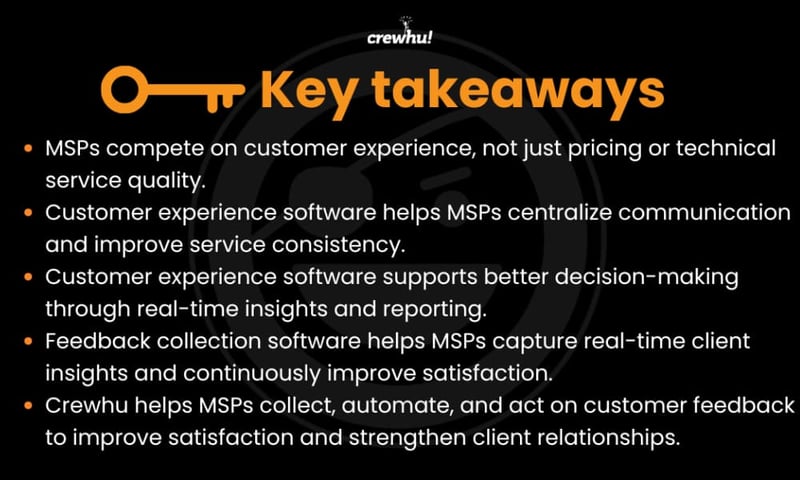
Most MSPs assume price is what clients care about most. It is not the deciding factor. Service quality and consistency often carry more weight, especially when clients rely on you long term.
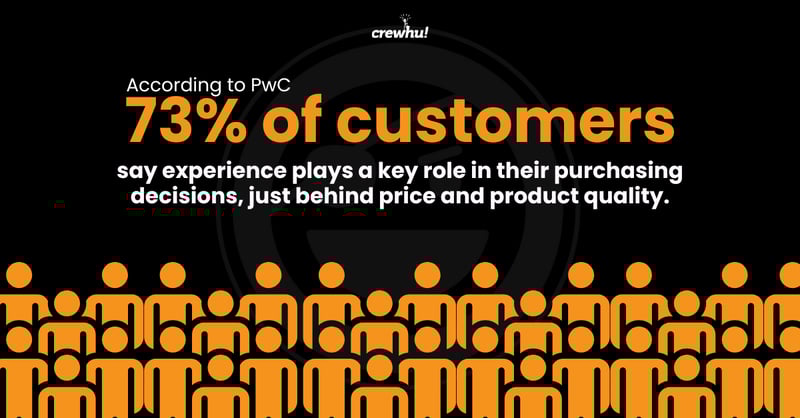
According to PwC, 73% of customers say experience plays a key role in their purchasing decisions, just behind price and product quality. That means even with competitive pricing, a slow response, inconsistent communication, or a frustrating interaction can cost you the deal.
For MSPs, this carries more risk because you are not selling a one-time service. You are building trust over time. Every interaction either strengthens or weakens that trust, and small service gaps quickly become patterns that affect retention and reputation.
Customer experience software gives you a way to bring structure and visibility into how service is delivered. Instead of relying on manual follow-ups or assumptions, it helps you capture feedback, act on it quickly, and maintain consistency without overloading your crew.
Continue reading to understand what customer experience software works best for MSPs, how to improve your online reputation, and how to manage customer feedback more effectively.
What customer experience software works best for MSPs?
The best customer experience software for MSPs does more than collect data. It helps create visibility, improve consistency, and make every client interaction easier to manage and act on.
Instead of relying on disconnected tools, high-performing MSPs use systems that support how work actually gets done, from handling requests to understanding client sentiment and improving service over time.
Here are seven key categories of customer experience software that support that shift:
1. Content & knowledge management software
This category focuses on organizing information so crews can access and deliver accurate answers quickly. It includes knowledge bases, help centers, and internal documentation systems.
When information is easy to find and use, responses become faster and more consistent. It also reduces repetitive questions and ensures that similar issues are handled consistently across clients.
2. Customer service & support software
These tools structure how requests are handled, from the moment a ticket is created to its resolution. They track issues, assign ownership, and keep communication organized.
Using these systems improves response times and makes accountability visible. Every request has a clear owner, and progress can be tracked without guesswork.
3. Customer engagement software
Customer engagement tools keep communication organized across channels like email, chat, and client portals. They make it easier to maintain consistent interaction without losing context.
This allows MSPs to stay proactive rather than react to issues. Regular, structured communication strengthens relationships and reduces the risk of client frustration.
4. Customer relationship management (CRM) system
CRM systems provide a complete view of each client by storing interaction history, account details, and communication records in one place.
With that visibility, MSPs can manage relationships more effectively, personalize communication, and maintain consistency across every touchpoint.
5. Customer analytics & insights software
These tools track service performance and client sentiment, turning raw data into actionable insights.
They help identify patterns that impact retention, highlight gaps in service delivery, and give leaders a clearer view of what is working and what needs attention.
6. User experience & testing software
User experience tools focus on how clients interact with your systems, whether that is a portal, dashboard, or support flow.
By identifying friction points, they help simplify interactions and reduce confusion. A smoother experience leads to fewer issues and more predictable service delivery.
7. Feedback management software
Feedback management software captures client input through surveys, ratings, and reviews, then makes it visible in a way that can be acted on.
This is where many MSPs fall short. Feedback is often collected but not used. With the right system, feedback becomes a signal that highlights what needs attention before it affects retention or reputation.
You can explore how this works in practice here.
How do MSPs improve their online reputation?
Your reputation is shaped long before a prospect speaks to you. Buyers actively look for proof such as reviews, testimonials, and peer feedback, before they ever engage, and many won’t move forward without it. By the time someone reaches out, your customer experience has already done most of the selling.
For MSPs, reputation is built through consistent service and reinforced by what clients say publicly. The question is how to make that process more reliable rather than unpredictable.
Here are practical ways to strengthen your online reputation:
-
Deliver consistent service quality: Trust builds when issues are resolved efficiently and service remains steady across every client. Consistency reduces complaints and reinforces credibility over time.
-
Encourage satisfied clients to leave reviews: Positive experiences should not stay internal. Prompting happy clients to share reviews increases visibility and influences future buying decisions.
-
Act on customer feedback: Reviewing feedback and making visible improvements shows clients that their input leads to real change. This builds confidence and strengthens long-term relationships.
-
Improve communication at every stage: Clear, proactive communication reduces confusion and sets expectations early. Clients are more likely to stay when they feel informed and supported.
-
Monitor online mentions and reviews: Tracking feedback across platforms allows you to respond early and manage perception before issues escalate.
-
Respond to customer issues quickly: Fast, structured responses signal reliability and prevent negative experiences from escalating. When clients see issues addressed promptly, it reinforces confidence in your service team.
MSPs that treat reputation as an ongoing system instead of a one-time effort build stronger client trust over time. When service quality, communication, and feedback are handled consistently, satisfied clients naturally become long-term advocates.
What tools help MSPS manage customer feedback?
MSPs rely on customer feedback tools to make client input visible, organized, and actionable. When feedback is connected to daily operations, it becomes easier to improve service quality and maintain a strong reputation.
Here are the main types of tools that support that process:
1. Survey and feedback collection tools
These tools capture structured feedback through surveys such as CSAT, NPS, and CES, typically triggered after support interactions or service delivery.
They give MSPs a consistent way to measure how clients experience their service and highlight patterns that would otherwise go unnoticed.
2. Review and reputation management tools
These tools track online reviews across platforms, making it easier to monitor what clients are saying publicly.
They allow MSPs to respond quickly, address concerns early, and maintain control over how their brand is perceived.
3. Voice of customer and sentiment analysis tools
These tools analyze feedback across multiple channels and identify trends in how clients feel about the service they receive.
Instead of focusing solely on what is said, they help MSPs understand the overall sentiment behind each interaction, providing deeper insight into the client experience.
4. CRM-based feedback systems
These tools connect feedback directly to client profiles and interaction history, creating a clearer picture of each account.
With that context, MSPs can respond more effectively, personalize communication, and make decisions based on past interactions rather than isolated data points.
Improve MSP feedback collection with Crewhu
Customer feedback only drives growth when it is captured consistently and used to improve how service is delivered. Without a clear system, feedback becomes scattered, delayed, or ignored, making it difficult to act on what clients actually experience.
Crewhu gives MSPs a structured way to turn feedback into something visible and actionable. Instead of relying on manual follow-ups, it connects feedback directly to daily workflows, making satisfaction, issues, and trends easy to track.
With seamless integration with your PSA, ticketing system, or email, Crewhu automates feedback collection across key touchpoints, including helpdesk replies, ticket closures, and project work. This creates a consistent flow of insight, allowing you to spot gaps early and maintain a clear view of client experience.
Ready to turn customer feedback into stronger relationships and long-term retention? Check out what our fans say first, then book a demo.