
Improve MSP EBITDA by reducing wasted technician hours, keeping great techs, and delivering service that protects recurring revenue.
If you run an MSP, you know that a busy service desk doesn't always mean a profitable one. Your technicians might close hundreds of tickets, but repeat issues, poor documentation, and constant escalations can quietly eat into the margin on your managed services contracts. That's why Crewhu helps MSPs turn everyday technician performance into real business results through recognition, gamification, and a culture of continuous improvement.
EBITDA, or earnings before interest, taxes, depreciation, and amortization, helps show operating profitability before those expenses. Your EBITDA margin compares that figure with revenue. However, the financial report won't tell you which technician habits or service problems are driving the result.
Gallup reports that highly engaged business units achieve 18% higher productivity and 23% higher profitability than less engaged units. Those figures aren't MSP-specific, but they reinforce why team performance deserves leadership attention.
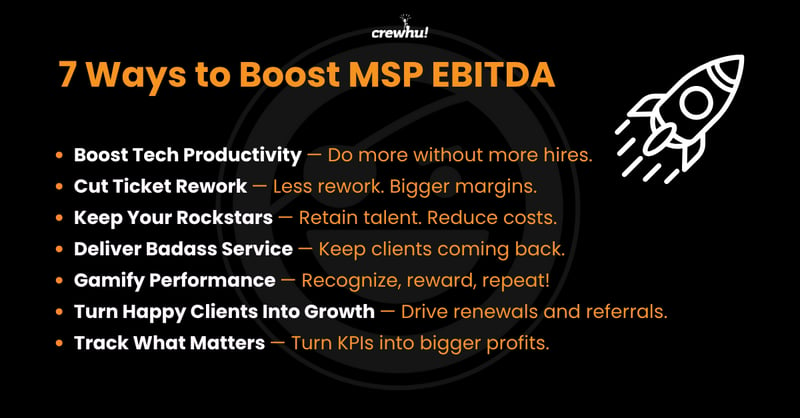
Here are the seven ways to improve MSP EBITDA by making your service desk more efficient, keeping strong technicians, and protecting client relationships.
7 Performance Levers That Improve MSP EBITDA
Are your everyday operational challenges limiting your MSP’s profitability more than you realize?
Here are seven performance levers that can help you improve efficiency, strengthen client relationships, and improve MSP EBITDA:
1. Improve technician productivity without adding headcount
Before hiring another technician, look at how much of your existing crew's time goes toward useful service work. Repeated status updates, poor ticket routing, and hunting for missing documentation can consume hours without improving the client experience.
Start by identifying where time is lost, then improve ticket assignment, knowledge sharing, and workflows. Measure productive capacity alongside quality, not simply the number of tickets closed. Recovering wasted hours can lower delivery cost per client and create room for growth without matching every new contract with another hire.
2. Reduce ticket resolution times and repeat work
A ticket closed quickly isn't a win if it reopens tomorrow. Repeat visits and recurring incidents consume technician hours twice, while frustrated clients may need extra attention from managers.
Track reopen rates, first-contact resolution, and recurring ticket categories. Give techs time to document root causes and recognize fixes that last. Fewer repeat tickets mean more capacity for other clients and less labor absorbed by existing contracts.
3. Retain top technicians and reduce turnover
When an experienced technician leaves, you're paying for recruitment and onboarding while the remaining crew carries extra tickets. You can also lose account knowledge that made difficult issues easier to resolve.
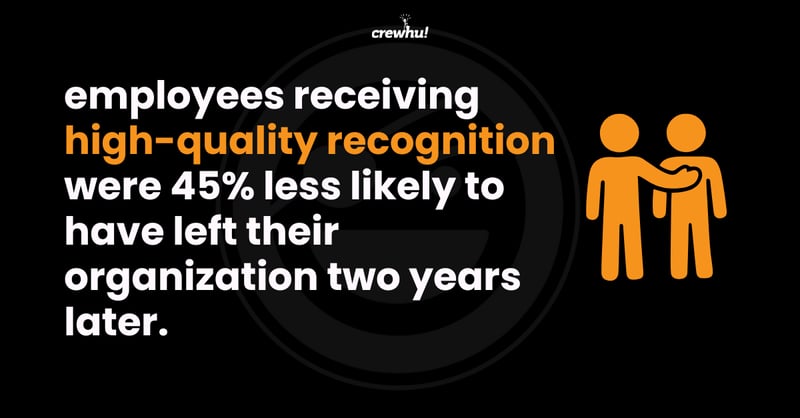
Recognition won't fix an unsustainable workload or poor compensation. However, acknowledging excellent service, teamwork, and improvement can strengthen engagement. Gallup and Workhuman found that employees receiving high-quality recognition were 45% less likely to have left their organization two years later.
Pair recognition with coaching, career development, and manageable workloads. Our employee retention strategies explain additional ways to keep valuable talent.
4. Improve service quality to protect recurring revenue
Your clients pay a recurring fee because they expect dependable support. If tickets keep reopening, updates are late, or SLAs are regularly missed, the cost of serving that account rises while renewal confidence falls.
Watch complaint trends, SLA attainment, and repeat escalations together. Address service gaps early and recognize technicians who communicate clearly and resolve issues thoroughly. Protecting contract renewals helps preserve revenue without having to replace lost accounts through new sales.
5. Align technician goals with business performance
If the only target your crew sees is ticket volume, don't be surprised when technicians rush to close tickets. That may improve a dashboard while increasing rework and frustrating clients.
Set balanced goals around resolution quality, response times, documentation, and CSAT. Use recognition and gamification to keep progress visible and reward the behaviors behind strong service, not just the highest ticket count. The aim is accountability that supports both efficiency and client satisfaction.
6. Turn Client Satisfaction Into Profitable Growth
Good CSAT isn't revenue by itself. However, consistent service gives clients reasons to renew, recommend your MSP, and consider additional support.
Don't leave positive comments in a survey report. Share them with the technicians responsible, flag potential advocates for appropriate review requests, and use account conversations to understand unmet needs. These actions can support retention and referrals without treating every happy client as an immediate sales opportunity.
7. Track operational KPIs that affect EBITDA
Your P&L shows the outcome. Service desk metrics help explain what might be causing it. Focus on a manageable set:
- Technician utilization: How much available time goes to productive work?
- Ticket reopen rate: How often does the crew repeat work?
- First-contact resolution: How often are issues resolved without extra handoffs?
- Employee turnover: Are departures creating replacement costs and capacity gaps?
- Client retention: Are you protecting recurring contract revenue?
Compare these trends with delivery labor cost, revenue per technician, and EBITDA margin. That gives you a better basis for judging whether operational changes are actually improving profitability.
How to start improving MSP EBITDA
You do not need to overhaul every process to improve MSP profitability. Start with one operational issue that affects productivity, service quality, or employee retention, then measure whether your changes deliver results.
Here is a simple plan to get started:
1. Identify the gap: For example, repeated tickets are consuming too many service hours.
2. Set the measure: Track reopen rates and time spent on repeat work.
3. Reinforce the fix: Coach better documentation and recognize lasting resolutions.
4. Check the result: Compare service hours, client feedback, and margin trends over time.
If the numbers improve, keep the process and apply what you've learned elsewhere. If they don't, revisit the cause instead of simply pushing technicians to work faster.
Improve MSP EBITDA With Crewhu
Better margins don't come only from cutting expenses. They also depend on how effectively your technicians solve problems, how consistently clients receive good service, and whether experienced people stay with your MSP.
The challenge is reinforcing those behaviors across a busy service desk without manually tracking every win. Crewhu connects customer feedback, employee recognition, performance goals, and gamification so you can make great service visible and encourage your crew to repeat it.
Ready to connect technician performance with stronger MSP results? Book a demo with Crewhu.