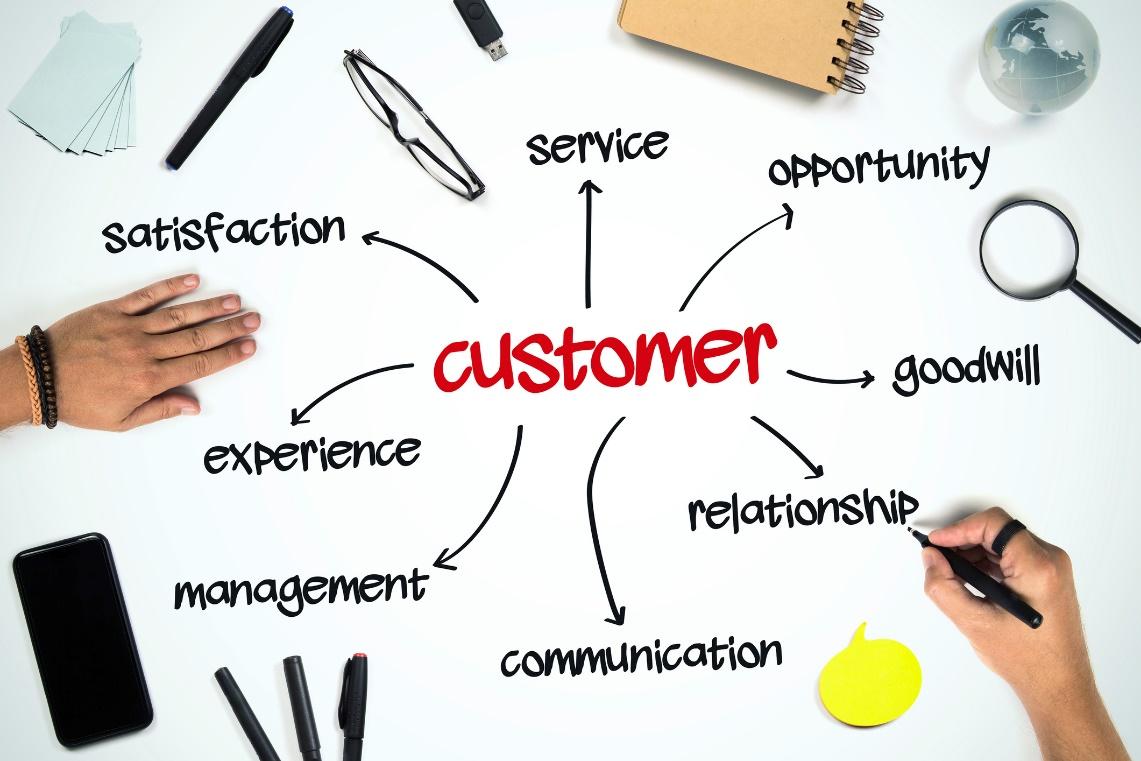
Customer service has an inward flow. Customer care flows outward. You need to know who should practice each, and how both contribute to the overall customer experience.
You wouldn’t be reading this if you didn’t have competitors that are snatching up prospects and customers. You do – and they can match you on price, as well as quality. How, then, do you differentiate yourself?
Is it a zig, when everybody else is doing the zag? Something like that. It’s called customer experience, and it means creating an unbreakable relationship that puts a buffer between you and competitors. Here’s the thing about customer experience: It’s not the same thing as customer service. It’s also different than customer care. Here’s what you need to know.
Related, but not the same thing
To understand the difference between customer service and customer care, and the roles they play in the customer experience, we need to understand and agree on what each of these three things means.
- Customer service is the assistance and advice you give to your customers. Your goal is to increase customer satisfaction. Mostly, this is just through answering their questions. It also usually happens after the purchase. Think of customer service as the interaction to ensure an excellent buying experience.
- Customer care is the experience they have while they interact with your brand. On the surface, it seems a lot like customer service, but you’re not just answering questions and helping them to make a buying decision. Customer care is a proactive approach. You’re not waiting for them to ask you the best way to use your product or service. You’re listening and offering solutions or perspective before they ask.
- Customer experience is the sum of their interaction with your brand. It encompasses the time frame from discovery through purchase, and their ongoing interaction afterward. It measures how customers feel about your company overall. That quick survey you were asked to take after you called the customer service line to ask how to reset your new programmable pressure cooker? That would measure just one piece of your customer experience – in this case, what you thought about customer service.
Do you get the idea of a time theme here? Then you’ve got the right idea. You see that customer experience is overarching. You also see that customer care, and customer service are contributors.
Separate but equal
You also likely noticed that customer service tends to be reactive in nature. Someone has a question or a problem. The direction is inward. Someone’s entire history of customer service might be made up of just one interaction – the time they called because they needed help.
There’s a high probability that you’ve got people who focus on nothing but customer service. Do you see the disconnect if you also make them responsible for customer care? That’s an outward flow. Most business owners would agree that this is the responsibility of everyone – not just a single department.
So, you have inward-flowing customer service – which may be a single event and can be a reactive process practiced by a specific group. Then there’s ongoing and outward-flowing customer care – which is a proactive process undertaken by everyone. Both contribute to the customer experience.
How do you know if you’ve been successful in these areas? Ultimately, it’s because your existing customers either return to buy again, or they recommend your brand to friends. Some customers choose to measure success by their net promoter score (NPS).
X + Y = Z
To get to that warm and fuzzy NPS score, you’ve got to make sure you don’t get lopsided on the customer service versus customer care side of the equation. If customer service is an inward flow, how do you increase the bandwidth to have more of these possibly singular interactions? If customer care is ongoing and outward, how do you help your organization step up and be more invested in taking proactive steps? One tips is to ensure your employees are engaged. Happy, engaged employees are helping you to take better care of the overall customer experience.
CrewHu has the tools to help you design the ideal employee recognition program. We offer customizable online surveys, peer recognition programs, goals-based contests, and more, so you can reward and thank your hardworking employees. Sign up now, so you can start or improve your employee recognition initiatives to improve your business’ customer experience.