KEY TAKEAWAYS
- A successful MSP sales strategy focuses on business outcomes and risk reduction, not technical features.
- A structured MSP sales funnel helps convert leads into long-term managed services contracts.
- Verified customer satisfaction data and social proof captured through platforms like Crewhu can increase credibility, attract new prospects, and help MSPs generate more sales opportunities.
Many managed service providers (MSPs) lack a structured sales strategy, relying heavily on referrals that rarely provide the volume of consistent selling opportunities required to scale a business.
Successful MSPs approach sales differently. Instead of waiting on the founder's network, they implement a repeatable, consultative process that continuously attracts the right clients and builds long-term relationships.
This proven process is anchored by trust. Businesses choose MSP partners they believe will protect their systems, secure their data, and support their operations over the long term. Effective strategies target high-fit clients systematically and convince them with concrete numbers and social proof.
This guide will show you how to transform your MSP sales strategy and build a scalable, reputation-based sales engine.
WHAT IS AN MSP SALES STRATEGY?
An MSP sales strategy is a structured system for helping businesses recognize the value of proactive IT management and positioning your company as a credible, trusted provider in your market. The goal is to identify prospects that value uptime over cheap IT and convert them into multi-year managed partnerships that generate high-margin monthly recurring revenue (MRR).
However, MSPs face a unique challenge: when you do your job well and nothing goes wrong, you may become invisible. The value MSPs deliver is peace of mind. Systems run smoothly, employees stay productive, and security threats are quietly stopped before they cause damage.
While this reliability is valuable, it rarely creates a visible ‘hero moment,’ which makes MSP services harder to sell. Prospects rarely see the preventative work happening behind the scenes, making it harder for providers to stand out and prove their expertise in a crowded market. Building visibility and credibility is therefore essential for MSP growth.
WHY MSPS NEED A MODERN APPROACH
The way businesses select IT services has changed, and today’s buyers are more informed and cautious than ever. Before speaking with a vendor, decision-makers often research potential solutions extensively. They compare providers, read reviews, and look for evidence of proven results.
At the same time, cybersecurity threats and compliance requirements have both increased dramatically. A single IT failure can disrupt operations, expose sensitive data, or damage a company’s reputation, so business leaders naturally give MSP selection significant importance.
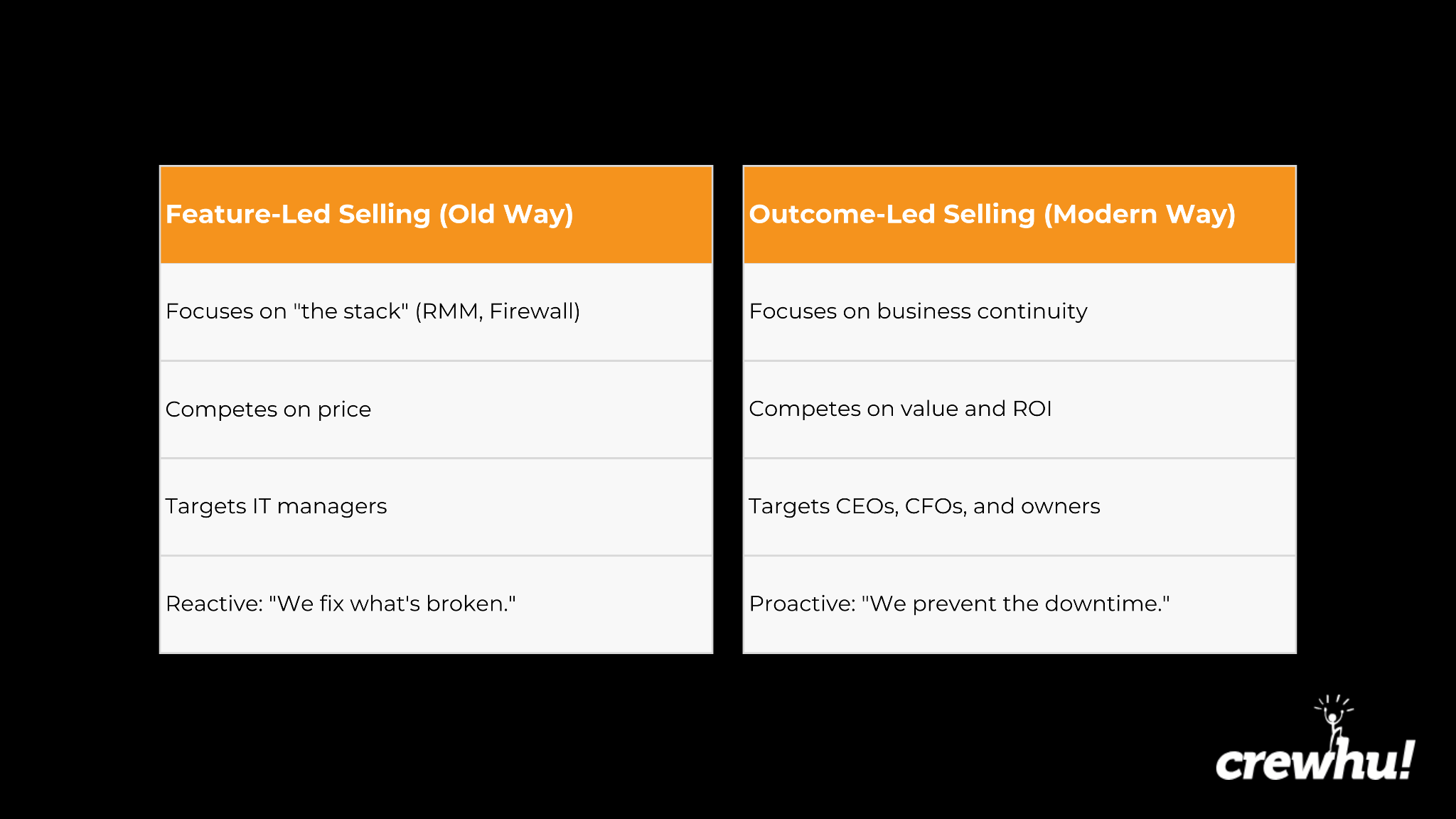
This shift means traditional feature-led selling, which focuses on tools and technologies rather than business impact, is no longer enough.
Modern MSP sales strategies must focus on consultative selling that emphasizes solving business problems and delivering measurable outcomes.
CORE COMPONENTS OF A SUCCESSFUL MSP SALES STRATEGY
An effective MSP sales strategy is built around a system that consistently attracts the right clients and demonstrates clear value. The following components form the foundation of that system.
Define Your Ideal Customer Profile (ICP)
One of the most common mistakes MSPs make is trying to serve everyone. While this may seem like an opportunity to maximize reach, it often leads to inefficient operations and low-margin clients.
A more effective approach is to define a clear ideal customer profile (ICP). This involves identifying industries and organizations where your services deliver the greatest value. Factors such as industry regulations, company size, operational complexity, and technology dependence influence whether a business is a good fit.
For example, many MSPs specialize in industries such as healthcare or financial services because they often have strict compliance requirements and complex technology needs, making proactive IT management especially valuable.
When you focus on the right customers, sales conversations become much easier. Instead of convincing prospects they need your services, you simply show them how you solve problems they already face.
Sell Business Outcomes
Technical capabilities are important, but they’re rarely the deciding factor in an MSP sale. Business leaders care about outcomes; they want to know how your services will improve their operations, reduce risk, and support growth.
Instead of explaining the minute details of your monitoring software, it’s better to emphasize how proactive monitoring prevents costly outages and keeps business systems running smoothly.
When you frame your services in terms of business impact rather than technical specifications, you differentiate your MSP from competitors and avoid competing solely through price.
Educate Prospects About Business Risk
By the time many prospects contact an MSP, they’ve already researched their options. However, they often still have gaps in understanding. Businesses know they need better IT support, but may not fully realize the risks they face.
You can position your MSP as a trusted advisor by educating prospects about those threats. For example, you can publish a guide explaining how ransomware attacks affect small businesses and how proactive monitoring can prevent them.
Education builds credibility. When prospects view your organization as an expert, they’re far more likely to trust your recommendations.
Reach and Influence Decision-Makers
In many organizations, the IT manager or office administrator will be your primary contact. However, final budget approval often comes from executives like the CEO, CFO, or operations director.
Successful MSPs learn to navigate these organizational dynamics. You must be able to identify key stakeholders, communicate value in terms that resonate with business leaders, and develop relationships with internal champions who support the proposal.
Internal advocates are more likely to support your proposal if it aligns with business goals, such as improved security, reduced downtime, or predictable IT spending.
Use Social Proof to Build Trust
Modern B2B buyers increasingly rely on the experiences of other customers before choosing a vendor. In fact, 77% of B2B buyers consult user reviews during their buying journey, which highlights the growing importance of testimonials, case studies, and peer feedback in building trust with prospects.
This is why many MSPs are adopting reputation-led sales strategies where customer satisfaction becomes a visible and powerful sales asset. Automated CSAT surveys, for instance, are used to capture and display real-time customer feedback on their business website to serve as proof of service quality.
Deliver Exceptional Service After the Sale
Closing a deal marks the beginning of a relationship. It’s crucial to deliver exceptional service to ensure customers remain satisfied and continue to expand their engagement over time.
Regular communication plays an important role in maintaining this relationship. One effective practice is conducting quarterly business reviews (QBRs), where you evaluate system performance, review security updates, and discuss future technology plans with the client.
These conversations reinforce the value of the partnership and help ensure your MSP continues to support the client’s evolving business goals.
BUILDING AN EFFECTIVE MSP SALES FUNNEL
A strong strategy must be supported by a clear sales funnel that moves prospects from initial awareness to long-term partnership.
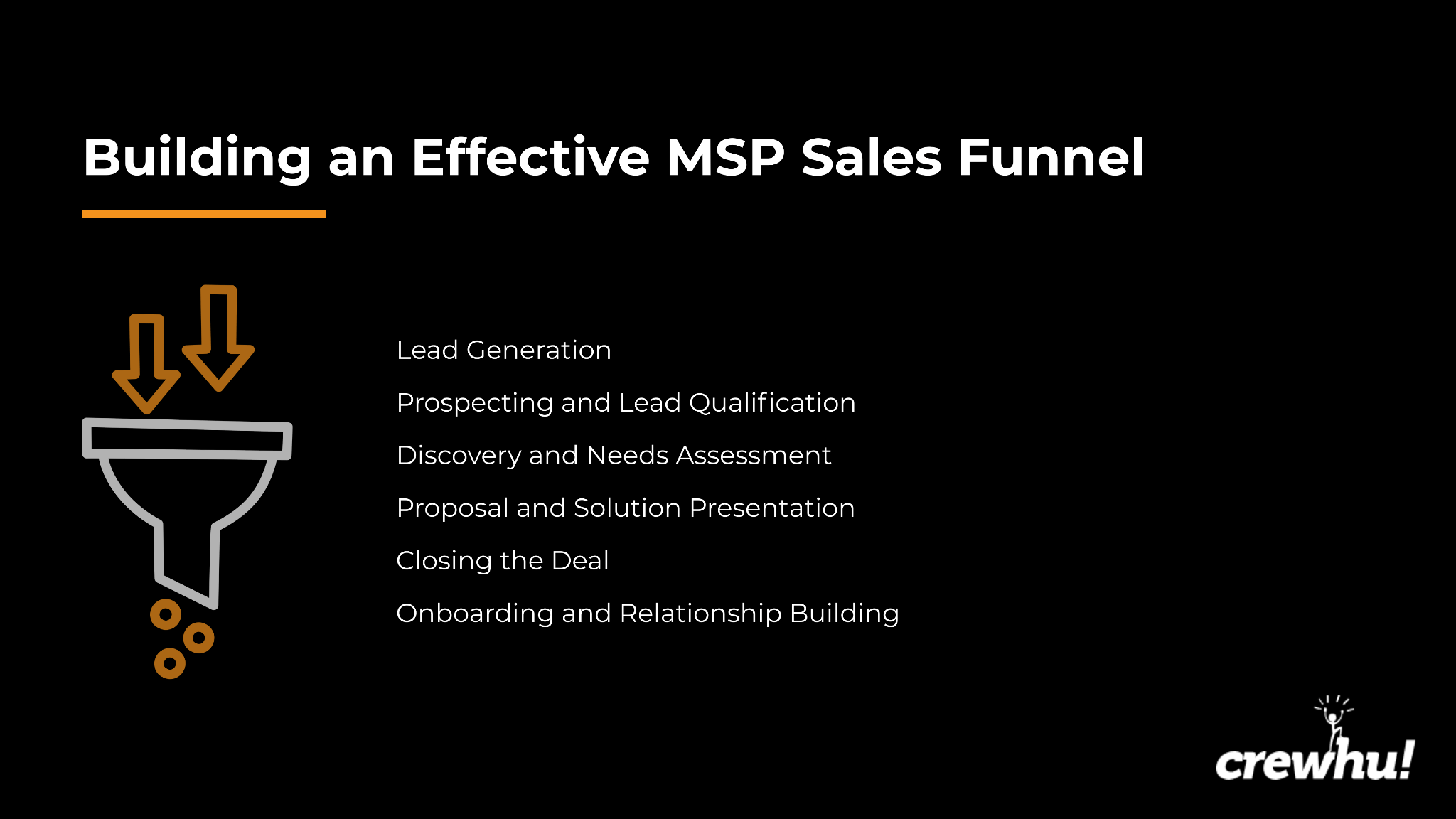
Lead Generation
Lead generation is the process of attracting potential clients who may need your services. Common channels to utilize include referrals, search engine optimization (SEO), content marketing, networking events, and targeted advertising campaigns.
For example, an MSP that specializes in healthcare technology might publish a detailed, SEO-optimized guide explaining how clinics can protect patient data and comply with HIPAA regulations. Organizations searching for this information are more likely to discover this content and eventually become qualified leads.
Prospecting and Lead Qualification
Not every lead is worth pursuing. Effective prospecting prioritizes opportunities based on factors such as budget, urgency, and overall fit with your ICP. This ensures your sales team spends time on opportunities with the highest potential value.
Pay attention to trigger events such as:
- Recent cybersecurity incidents
- Compliance audits
- Rapid company growth
- IT staff turnover
Discovery and Needs Assessment
The discovery stage is where MSP sales become consultative. Instead of presenting solutions immediately, the goal is to understand the prospect’s work environment.
This involves exploring business goals, identifying recurring technology challenges, and assessing potential security risks. During this phase, effective sales professionals listen far more than they speak. The insights gathered here shape the recommendations that follow.
Proposal and Solution Presentation
Once the discovery phase is complete, MSPs can present a solution tailored to the prospect’s needs. A strong proposal outlines the scope of services, pricing structure, service-level agreements, and contract terms.
However, the presentation should primarily focus on business impact. It should clearly explain how the proposed services will support the organization’s productivity, security, and operational stability. This helps decision-makers understand the value of the proposed partnership.
Closing the Deal
Closing an MSP sale often requires patience. Prospects may hesitate due to budgetary concerns, uncertainty about switching providers, or fear of receiving poor service.
Consistent follow-up is thus essential during this stage. Studies repeatedly show that many B2B deals require five or more follow-up contacts
before a decision is made, yet many sales teams stop after only one or two.
Reinforce trust through testimonials, case studies, and customer satisfaction data to help overcome hesitation and move the conversation toward a final agreement.
Onboarding and Relationship Building
A smooth onboarding process sets the tone for the entire client relationship. During this stage, MSPs typically implement monitoring systems, configure security tools, and provide training to the client’s staff.
Collect early feedback through welcome questionnaires or Net Promoter Score (NPS) surveys to identify potential issues before they escalate. This will facilitate a positive onboarding experience that builds confidence and lays the foundation for valuable, long-term collaboration.
MSP SALES TIPS TO DRIVE GROWTH
While strategy and process are important, several practical habits can significantly improve MSP sales performance:
- Build repeatable sales systems: A structured and documented sales process consistently outperforms relying on individual “rockstar” salespeople who operate without a clear framework.
- Position cybersecurity as a key differentiator: Security threats are one of the main reasons organizations seek managed services, so cybersecurity expertise is a powerful value proposition.
Respond quickly to inbound inquiries: Fast response times dramatically increase the chances of engaging prospects while their interest is still high. - Avoid bad-fit clients: Organizations that fall outside your ICP can drain resources and negatively impact service quality.
WHY MARKETING AND SALES MUST WORK TOGETHER
In many MSP organizations, marketing and sales operate independently. However, aligning these teams can significantly improve growth. Research shows that companies with aligned marketing and sales operations achieve 32% faster revenue growth.
Marketing builds awareness and trust long before the first sales conversation occurs. High-quality content, industry insights, and case studies position your organization as an expert.
Sales teams then build on that foundation by guiding prospects through the decision-making process.
Customer feedback also plays a valuable role here. Marketing can take the reviews and high client satisfaction scores captured by the service team and turn them into powerful social media posts, website widgets, and email marketing content.
This creates a positive cycle where great service fuels great marketing, which in turn fuels more high-quality sales.
KEY MSP SALES METRICS TO TRACK
Tracking performance metrics helps MSPs evaluate the effectiveness of their sales strategy and identify opportunities for improvement. Important metrics to monitor include:
- CAC (customer acquisition cost): This calculates how much it costs to win a deal. Formula: Total sales and marketing spend divided by new clients.
- LTV (lifetime value): This is the total revenue a client brings throughout the duration of their relationship with your company. Formula: Average contract value multiplied by the years a client stays.
- LTV: CAC Ratio: The industry gold standard is 4:1. If your ratio is lower, your sales strategy is too expensive for the revenue it generates. Formula: Lifetime value divided by CAC.
- Pipeline velocity: This measures how fast a lead moves to a closed deal. Formula: Number of active leads multiplied by your win rate and average deal size, then divided by the length of your sales cycle.
- MRR (monthly recurring revenue): This is your baseline for growth. Formula: Total number of active customers multiplied by the average amount they pay you each month.
- CSAT: This is the ultimate predictor of future referrals and retention. Formula: Number of positive responses divided by the total number of survey responses, then multiplied by 100 to get a percentage.
HOW CUSTOMER RETENTION STRENGTHENS MSP SALES
Acquiring new clients is important, but retaining existing ones is often more profitable.
Long-term clients generate consistent revenue and frequently expand their service agreements as their businesses grow.
Satisfied customers also become powerful brand advocates. They may provide testimonials, participate in case studies, or refer other organizations that need similar services.
Customer satisfaction data, therefore, serves two important purposes: It helps MSPs identify opportunities to improve service delivery and provides valuable social proof that supports future sales efforts.
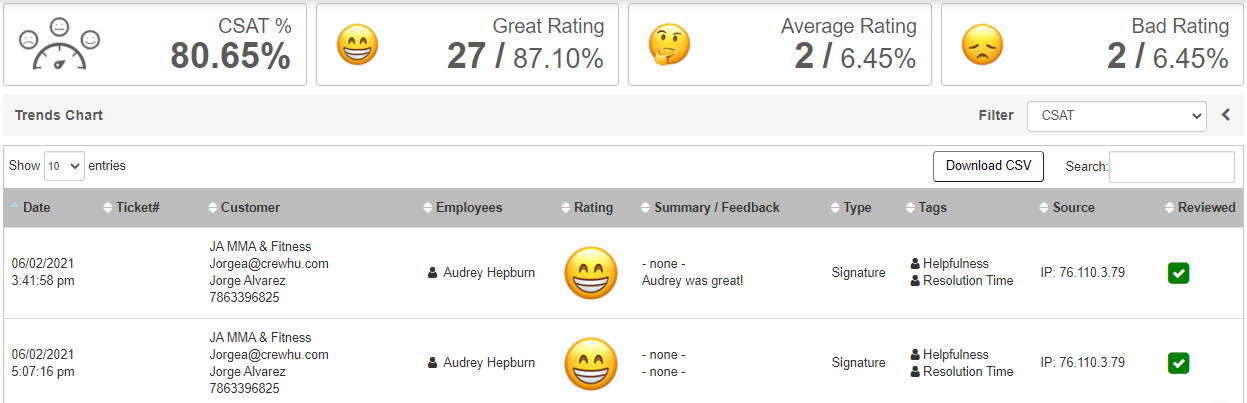
Platforms like Crewhu automate this process by collecting feedback after support interactions and organizing it into actionable insights.
CRAFT AN MSP SALES STRATEGY THAT DRIVES CONSISTENT GROWTH
Scaling an MSP business requires a repeatable system that consistently attracts the right clients and demonstrates clear value.
By defining your ideal customer, focusing on business outcomes, and implementing a structured sales funnel, MSPs can drive predictable growth rather than relying on chance opportunities.
Equally important is the role of reputation. Customer satisfaction, testimonials, and verified feedback provide proof that your services deliver real results.
Tools like Crewhu help MSPs capture that credibility automatically, transforming everyday customer interactions into a valuable sales asset.
Stop guessing how prospects perceive your service quality. Start turning customer satisfaction into your strongest growth engine. Book a Crewhu demo today to learn how.
FAQ
How long is the typical MSP sales cycle?
The MSP sales cycle typically ranges from 30 to 120 days, depending on the complexity of the services and the size of the client organization.
How do MSPs generate new clients?
MSPs generate clients through referrals, content marketing, SEO, networking, and targeted outreach campaigns.
How should MSPs handle price objections?
Instead of competing on price alone, MSPs should emphasize the long-term value of proactive IT management, including reduced downtime, improved security, and predictable costs.
What is the average profit margin for MSPs?
Profit margins vary widely, but many successful MSPs aim for margins between 15% and 25%, depending on operational efficiency and service offerings.
Which industries are best suited for MSP services?
Industries with high compliance requirements or complex technology environments, such as healthcare, finance, and legal services, often benefit the most from MSP support.